Introduction
In 2025, Nigeria is facing a serious security crisis; regional issues have escalated into a nationwide emergency. The recent cases of mass kidnappings of school children have enhanced the views of the people that the government is incapable of providing the required level of security. In November 2025, coordinated attacks on schools occurred in Kebbi, Niger, and Kwara States by armed groups taking hundreds of students hostage. Such an upsurge in violence is symptomatic of greater problems because Nigeria is struggling with five overriding security challenges, including jihadist insurgency, banditry, herder-farmer conflict, separatist movements, and Niger Delta militancy. These overlapping menaces are destabilising whole regions.
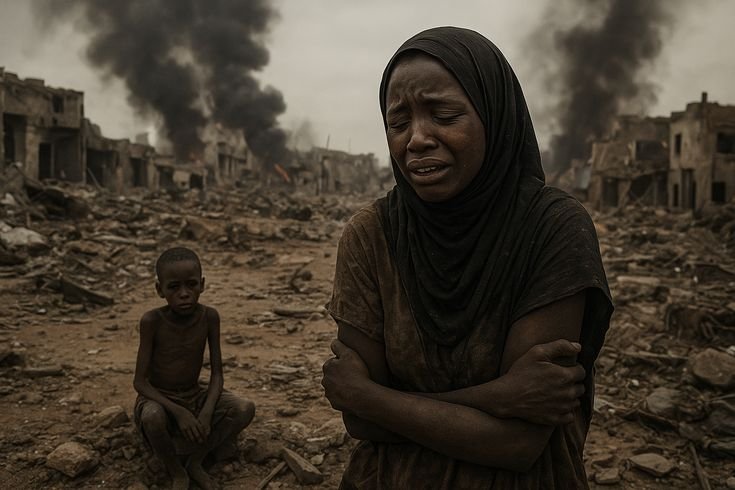
This has been followed by more than 1,000 schoolchildren taking part since 2020, and significant rises in 2024 and 2025. There are thousands of displaced communities, high unemployment among youths of over 40 percent, and rural farmers are leaving the land as they fear security. There is increased mistrust in the government’s capacity to secure citizens, and concerns about political involvement and collusion with armed factions have emerged.
As the largest economy in West Africa, Nigeria’s instability poses a significant threat to the entire region. Radical groups are strengthening, and local conflicts are escalating, prompting international partners to pay close attention. This paper discusses the key security challenges facing Nigeria in 2025, how they have increased since 2021, how the Tinubu administration has addressed them, and whether there are any urgent solutions to these challenges as the elections approach.
The Five Interconnected Security Threats Dominating Nigeria in 2025
In Nigeria, five significant threats contribute to the security crisis in 2025, which has developed far more than many people imagined 10 years ago. Such threats were initially identified in major international reports in 2021, and what we are witnessing today is a much more intricate and interconnected environment. The threats lead to each other, and it is a cycle of violence and expansion in almost every part of the country.
These five core challenges will be addressed as follows, along with how they influence the current situation.
1. Jihadist Insurgency in the North-East: Boko Haram and ISWAP Still Active
Even with the alleged technical defeat, Boko Haram and the Islamic State West Africa Province (ISWAP) have continued to be active in Borno, Yobe, and Adamawa in some areas. Specifically, ISWAP has been able to increase its power through alliances with smaller extremist cells and the seizure of strategic territories along Lake Chad.
As of 2025, both groups still carry out select ambushes, bombings, and attacks on military bases. They have changed their approach to making soft targets, taxing rural communities, and exploiting loopholes in local governance. Even though the military has already regained part of the territory, the insurgency is not at its end, and they are still forcing thousands of families into displacement camps.
2. Banditry and Mass Kidnappings in the North-West and North-Central.
Banditry has become one of the most serious security issues in Nigeria. States such as Zamfara, Kaduna, Katsina, Kebbi, and Niger are almost daily experiencing attacks in terms of mass abductions, ransom demands, and village raids.
The 2025 kidnappings of schoolchildren in Kebbi and Niger, and Kwara revealed the extent to which these groups have developed to be organised and well-armed. Most of them are run like crime cartels and have access to heavy arms, informant groups, and political favors. Their operations interfere with education, agriculture, commerce, and local administration. Some local governments have been completely depopulated, as people no longer feel secure.
3. Herder-Farmer Conflicts: Climate, Land Pressure and Ethnic Tensions.
The Middle Belt is once again plagued with fatal violence between the farming people and the migrating herders. Climate change and desertification have compelled pastoralists to migrate southward in search of grazing land, leading to fierce competition for farmland and water.
Such conflicts are usually ethnic and religious in nature, mostly in Plateau, Benue, Nasarawa, and southern Kaduna. What were once regional conflicts have escalated into massive bloodshed, with armed militia on both sides. This conflict continues to be one of the largest causes of food insecurity, deserted farms, and internal displacement in 2025.
4. Separatist Agitations in the South-East (IPOB and ESN)
In the South-East, there is a high level of separatism tension with the Indigenous People of Biafra (IPOB) and its militant group, the Eastern Security Network (ESN), fighting the security forces.
The magnitude of violence will vary, but 2025 has witnessed the revival of the wave of attacks on police stations, government buildings, and transport routes. The sit-at-home calls by separatist groups keep on disrupting economic activity by compelling businesses to shut down and exposing residents to the harassment of militants as well as state agents.
The situation in the region has led to a vicious cycle in which fear, distrust, and strong-armed reactions keep the crises alive.
5. Niger Delta Resurgent Militancy and Cult Violence
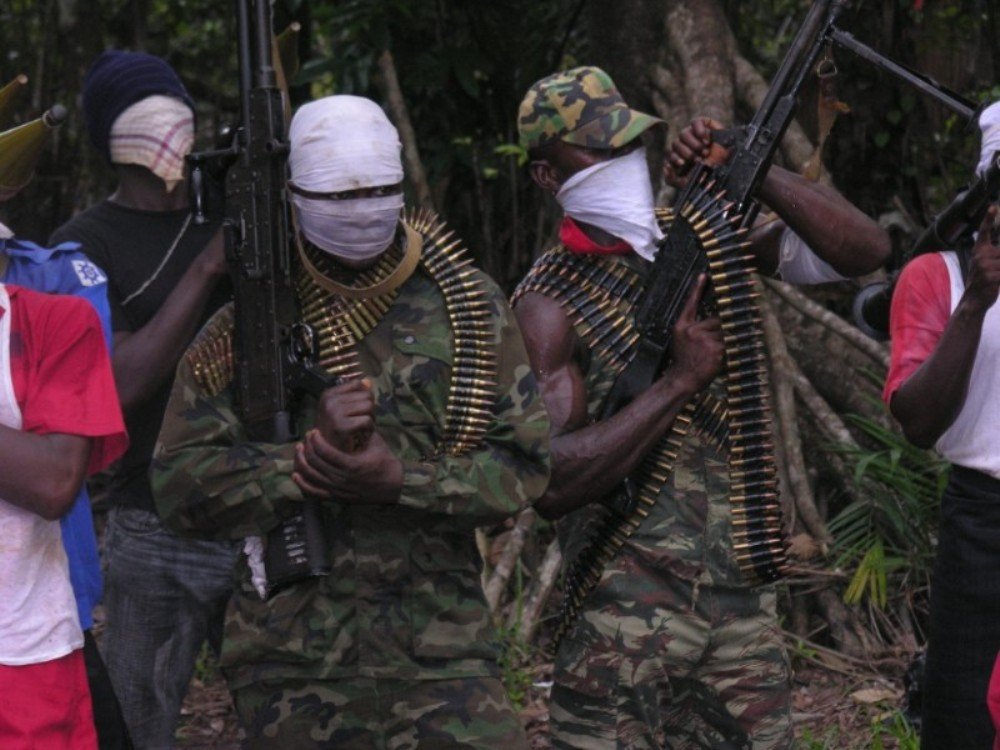
Niger Delta is still a security challenge of pipeline vandalism, stealing oil, kidnapping, and militias. Although after the amnesty programme, large-scale militancy decreased, there are newer armed groups that have emerged, and they target oil infrastructure, and fight over who controls the illegal refining sites.
Cults and political thugs are also making states such as Rivers, Bayelsa, and Delta unstable. Their operations interfere with the production of oil, the destruction of the environment, and cause an unending tension between the communities and the security forces.
What Changed Between 2021 and 2025? Key Escalations
The security crisis in Nigeria did not simply continue in 2021 but also changed, making the situation even more volatile by 2025. The risks identified in previous reports, such as the BBC’s 2021 report, have escalated. Several new trends emerged, demonstrating that insecurity has spread faster than the government could control it.
School abductions rising again
Mass kidnappings were again acutely noticed in 2024 and 2025 after a slight decline in 2022 and 2023. The Chibok and Kankara cases were being revived in cases in Kebbi, Niger, and Kwara. The criminal gangs have discovered that school children are worth targeting since, in most cases, their release is ransomed by communities and governments at a very high price. This has compelled most schools to close or at least operate during the day, meaning thousands of children miss classes in the most affected states.
Military withdrawals before attacks
The second alarming trend is the cases of security forces withdrawing from vulnerable towns just before the bandits or the insurgents attack. Societies in Zamfara, Kaduna, and Plateau have raised alarm several times. Although the military has refuted deliberate negligence, this trend has drawn the public’s concern. As a result, most of the residents have been forced to depend on the vigilante groups or the local hunters rather than the federal forces to protect them.
Accusations of high-level complicity
In 2024 and 2025, there were increased claims that certain political and security officers are possibly enjoying ransom or gun-running. Though these assertions may be hard to ascertain, they are indicators of general anger. The feeling that some insiders are benefiting from the mess has only increased distrust and undermined the government.
Failure to designate bandits as terrorists
Ever since 2021, there have been calls to designate large bands of bandits as terrorist organizations to take on harder legal and military measures. The process has been halted despite the pressure from the population. In the absence of such classification, most of the arrested suspects are charged with minor offenses, which presents them with more chances of returning to violence. This policy loophole has enabled the bandit networks to become more organized and violent.
Root Causes: Beyond the Headlines.
The security crisis in Nigeria in 2025 does not have one cause. It can be attributed to economic pressure, environmental transformation, poor governance, and the consistent proliferation of weapons within the region. It is these deeper problems that have given rise to insurgents, bandits, and armed groups.
Economic collapse and rising youth unemployment
Young people have been the worst affected by the economic slowdown. Given unemployment levels above 40 percent among youth, most are being sidelined. The armed groups take advantage of this frustration by providing easy money, food, or shelter. In many rural areas, it is the only way to survive by joining a gang or a militia. Security operations will not prevent people from joining violent groups until the economy is stable.
Climate change is pushing herders south
Desertification is still reducing the grazing space in the north. As herders shift into farmland across the Middle Belt and southern states, clashes have escalated. The struggle to access water, land, and crops is often violent, particularly when local governments are unable to arbitrate disputes. The pressure on the climate has transformed historical tensions between the farmers and the herders into a national war.
Flow of small arms from regional conflicts
Armaments from the fall of Libya, as well as the Sahel wars, have continued to find their way into Nigeria. The weapons are inexpensive and easy to smuggle across porous borders. When they are in the country, they find themselves in the hands of bandits, insurgencies, cults, and even certain local militia. Availability of guns has also increased, making simple conflicts life-threatening.
Corruption and a breakdown of governance.
Many Nigerians believe they are no longer under the protection of the state institutions. The lack of promptness in response to attacks, arbitrary arrests, and closed investigations has been breeding suspicion. Trust goes down even more when the locals witness fully armed criminals going about their business freely, and the security agencies are unable to cope with a lack of equipment. This insecurity leads to the emergence of local vigilante groups within communities, which, in some cases, results in more conflict, not less.
Politics shaping security decisions
The security matters tend to be politicized. In other situations, the authorities do not take decisive measures due to local sensibilities or ties. Critics add that this is similar to the situation before the Chibok kidnappings of 2014, when politics paralysed the need to take urgent steps in security. The outcome is a reactive, disjointed, and manipulative response.

The Tinubu Administration’s Response
President Bola Tinubu came into power with the hopes of restoring security, strengthening the military, and restoring people’s confidence. His administration has achieved some results by 2025, but many Nigerians believe the outcomes are not as good as the crisis demands. The answer is a blend of localized achievements, highly divisive policy, and loopholes that have left aggrieved societies aggravated.
Higher military spending and small battlefield gains
The government increased its defense budget and invested in drones and surveillance equipment. The joint efforts in the North-East have driven the Boko Haram fighters out of various hideouts, and some of the displaced families have been able to go back. Organizations such as Amotekun are also regional structures that have helped curb petty crimes and attacks in some parts of the South-West. These victories demonstrate that organised action can be a real difference-maker when well-financed.
Reliance on non-kinetic peace deals
One of the greatest criticisms is that negotiations and amnesty agreements with armed groups are still in use, particularly in the North-West. The government tends to refer to them as non-kinetic methods intended to persuade the bandits to lay down their arms. However, most Nigerians believe that such deals only empower criminal gangs, as they get paid, while victims do not get much justice. A number of the bandits who signed peace agreements are also said to have resumed kidnapping shortly after.
Quiet leadership after major attacks
Communication has been a weak point in the administration. The presidency is silent for days after the large-scale kidnappings or raids in the villages. This silence, according to the families of the victims and civil society groups, brings about an illusion of being abandoned. It is also due to the lack of timely briefings that leads to rumors and conspiracy theories, which further increase fear and mistrust among the people.
Calls for foreign assistance and security reform
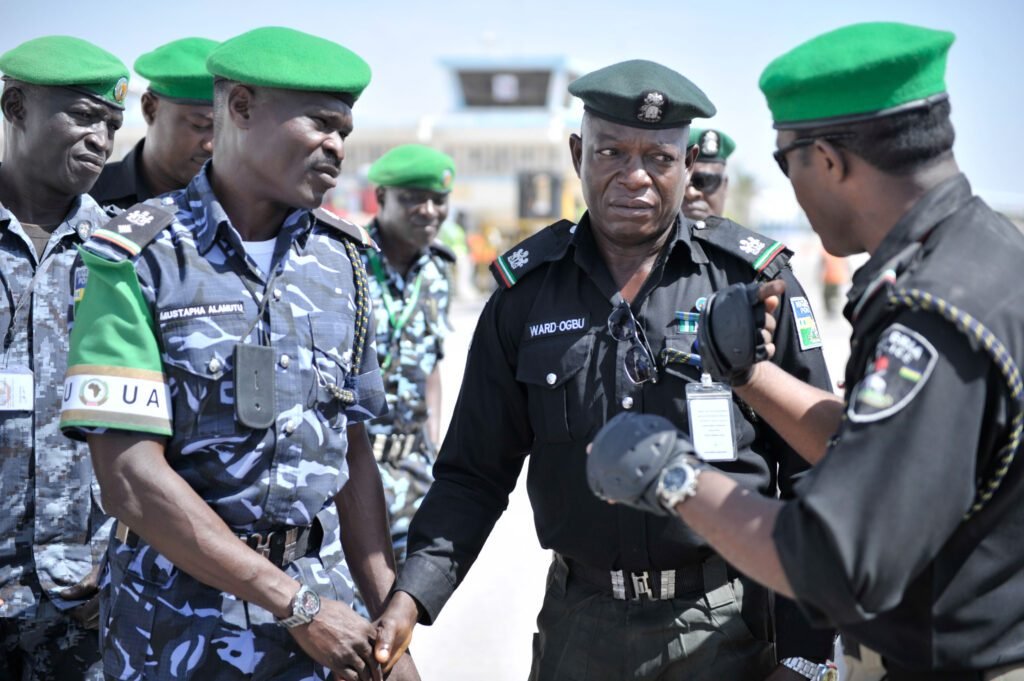
The government has been under mounting pressure, paving the way for further international cooperation. Discussions on intelligence sharing, drone support, and regional joint task forces have become more widespread. Simultaneously, legislators and observers say Nigeria requires structural changes, including state police, a better command structure, and border controls. Such discussions indicate a greater appreciation that the existing security model is no longer satisfactory.
Human and Economic Cost in 2025
The security crisis has gone much beyond single attacks. Its influence is changing daily lives by 2025 and diminishing the sense of progress and national confidence. They affect human and economic costs across education, agriculture, investment, and national cohesion.
School kidnappings are destabilizing school education.
Northern states have been experiencing over a thousand schoolkid abduction cases since 2020, with steep rises in 2024 and 2025. Many schools in Kaduna, Niger, Zamfara, and Kebbi are running on a shorter timetable or are even closed. Families are afraid to send their children to school, and more teachers are not ready to work in high-risk schools. It is a blow to the education of an entire generation and increases the existing disparities.
Abandoned farms and shrinking food supply
The vast expanses of rural territory are abandoned because farmers are afraid of being attacked on their fields or kidnapped along the village roads. This has slowed the food production in several states, particularly in the North-West and Middle Belt. The societies that used to depend on agriculture have to support themselves by buying food at high prices or by moving to overcrowded towns. Food inflation is still high because agricultural production is unstable due to insecurity.
Pulling out of foreign investors.
Repeated attacks, pipeline damage, and the volatile security situation have deterred foreign investors. Some foreign firms have slowed down or even shut down businesses, citing safety concerns. This is a form of demarketing of Nigeria, which is detrimental to job creation, and this strengthens the economic plight that acts as a trigger to more violence. Nigeria will lose its opportunities to other, more stable African markets unless it improves its security record.
Emerging issues over national stability.
Security experts caution that in case various crises persist in overlapping, the banditry, insurgency, separatist tensions, and economic pressure, the country may tend to degenerate into even greater instability. Though Nigeria is not on the verge of collapse, the long-term insecurity undermines the institutions, puts pressure on local governments, and overstretches the military. The longer these conditions persist, the more difficult it will be to regain trust and rebuild destroyed areas.
Possible Solutions Being Debated Right Now
The security crisis in Nigeria has become so critical that, according to most analysts, the existing strategy is inadequate. In policy quarters, civil society and local leaders are pushing various concepts as viable measures to stabilize the nation. These are solutions that are composed of legal reforms, increased enforcement, and long-term socio-economic strategies.
Nationwide prohibition of open grazing.
Many state governors and regional groups have revived calls to introduce an outright prohibition on open grazing. Proponents claim that ranching structures would reduce conflicts between farmers and herders, reduce cattle migration, and establish a more modern livestock industry. Critics argue that it should be heavily invested in and transitioned to support herders. Nevertheless, the demand for a national policy is mounting.
Acceptance of armed gangs of bandits as terrorists.
Among the most prominent ideas here is the official recognition of large bandit gangs as a terrorist group. Such a change in laws would enable the government to employ more powerful counter-terrorism measures, limit their finances, and prosecute them more easily. Nigerians feel that this is long overdue, considering the magnitude of violence and mass kidnappings attributed to these groups.
Establishing state police and provincial security agencies.
The State police surge has been increasing. Proponents argue that locally based forces are better informed about their localities and respond more quickly to threats. Local formations such as Amotekun in the South-West and Ebube Agu in the South-East demonstrate how local security can supplement federal security. Others fear abuse by political leaders, and in this regard, there are calls for tighter control and greater accountability of state politicians.
Greater interaction with foreign partners.
Nigeria is also looking to build closer relations with nations that have experience in combating insurgency and organized crime. This covers sharing of intelligence, providing drone support, training special forces, and joint operations in border areas. Although others fear the issue of sovereignty, many people think that foreign aid might help bridge crucial gaps in surveillance and technology.
Deradicalization and job creation programmes.
Long-term peace is pegged to making armed groups less appealing. Youth employment schemes, vocational training, community rehabilitation, and deradicalization programs would reduce the number of recruits. These attempts are not fast but necessary since, in many cases, poverty, exclusion, and the absence of opportunities are identified as the source of the insecurity in Nigeria.
Conclusion
Nigeria is currently at a crossroads as it heads to elections in 2026. The security crisis that has characterized the past decade has been even more compounded, pervading every aspect of national life and informing political discussions. Societies desire actual transformation, rather than commitments. Before long-term capital is introduced, the investors want stability. And millions of young Nigerians are keeping a watch to see whether their leaders can at last provide them with safety and opportunity.
The decisions taken next year will either see Nigeria start to turn back its security situation or further sink into the abyss of uncertainty. It can be concluded that, with stronger policing, terrorism designation, border controls, youth employment, and conflict-resolution policies, the country will be on the path to recovery. However, given that the existing trends are maintained, mass kidnappings, the growth of bands, the erosion of trust and political indecision, the stress on the state will only increase.
The 2026 elections are not just a vote. They constitute a national trial. Nigerians will decide whether they believe the government has the will and ability to defend them. The international community will also be observing and evaluating whether the country will remain stable enough to continue leading regional economies.
To progress, Nigeria needs security to be a real agenda, supported by action, openness, and vision. The next year will provide an occasion for a clean slate. It will be a turning point or a breaking point, depending on the decisions that are made today.
About The Author